













ARC and L2ARC Sizing on Proxmox

ARC and L2ARC sizing in Proxmox is a capacity-planning problem, not a tuning exercise. This article explains how to budget RAM for guests and ZFS, set deterministic ARC limits, and decide when L2ARC improves performance—and when it adds unnecessary complexity.
Pool and VDEV Topology for Proxmox Workloads
Designing ZFS pool and VDEV topology is a foundational decision for Proxmox performance, resiliency, and operability. This article explains how mirrors, RAID-Z, SLOG, ARC/L2ARC, and recordsize choices shape real-world VM workloads—and how to align them with Proxmox’s native ZFS integration.
Why EU Companies Are Choosing ZFS for Tech Sovereignty: Live Entersekt Case Study
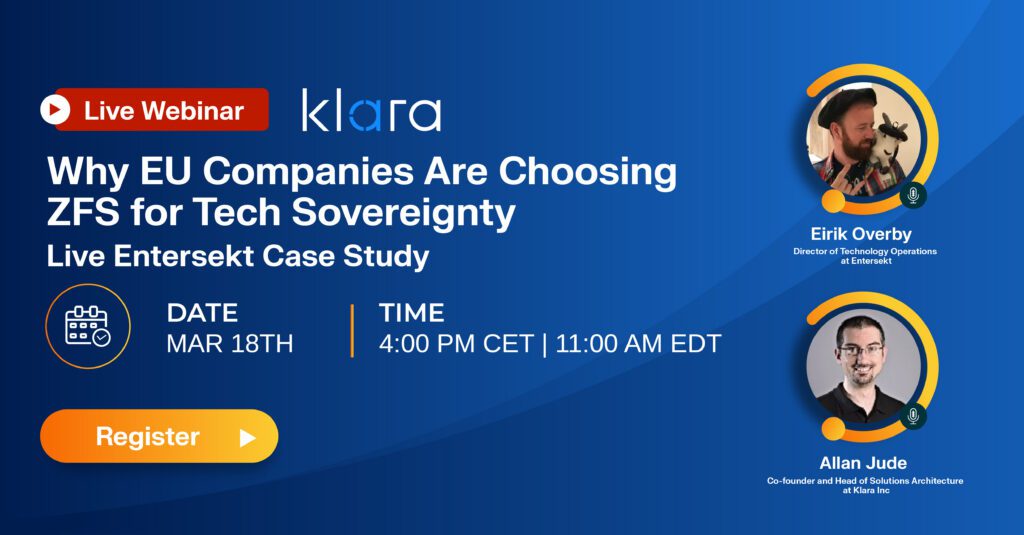
How do European organizations keep control of their data without vendor lock-in? In this live session, Entersekt shares why they chose ZFS as the foundation for open-source storage aligned with EU data sovereignty goals. Join the live session to hear the architectural decisions, trade-offs, and real-world results.
ZFS vs Btrfs: Architecture, Features, and Stability

ZFS and Btrfs both aim to modernize storage by combining filesystems and volume management, but they were built with very different priorities. This article examines their architectures, core features, and long-term stability to explain why ZFS remains the preferred choice for data integrity at scale, whereas Btrfs trades reliability for flexibility.
Modern VDI on Proxmox: ZFS Reliability and GPU Acceleration at Lower Cost
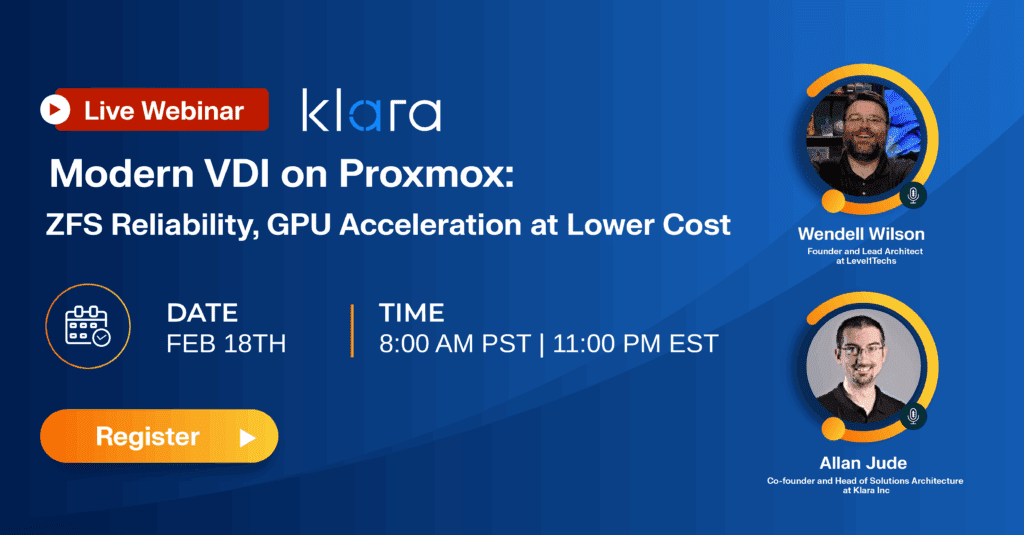
Running VDI doesn’t have to mean high licensing costs or fragile stacks. Join this session to see how Proxmox, ZFS, and GPU acceleration work together to deliver reliable, high-performance virtual desktops without lock-in.
ZFS in Production: Real-World Deployment Patterns and Pitfalls
ZFS is widely trusted for large-scale storage, but production environments expose design mistakes, operational drift, and false assumptions that don’t appear in smaller deployments. This article explores real-world ZFS deployment patterns, common pitfalls, and the operational practices required to keep ZFS reliable at scale.
Klara’s Expert Perspective on OpenZFS in 2026 and What to Expect Next

How will OpenZFS evolve in 2026? Klara’s experts outline their predictions across hardware, system design, and reliability. Read on for a grounded look at what to expect.
Understanding ZFS Scrubs and Data Integrity

ZFS scrubs verify the integrity of all allocated data and metadata blocks in a storage pool by validating checksums and repairing corruption through redundancy. This article explains how ZFS scrubs work, how they differ from resilvers and traditional filesystem checks, how to interpret zpool status output, and why regular scrubbing is critical for preventing silent data corruption in production storage environments.
Unwrapping ZFS: Gifts from the Open Source Community

OpenZFS users got a stack of new “gifts” in 2025: better allocation, stronger hybrid-pool performance, faster encryption, and long-requested rewrite tools. Here’s what the community delivered and the benefits you can unwrap right now.
What We Built: Top ZFS Capabilities Delivered by Klara in 2025

Klara’s ZFS engineering work continues to push the industry forward with features that make storage faster, more resilient, and easier to operate at scale. These enhancements help organizations reduce hardware spend, accelerate diagnostics, and maintain stable performance under demanding workloads. Read this post to learn what we delivered in 2025.