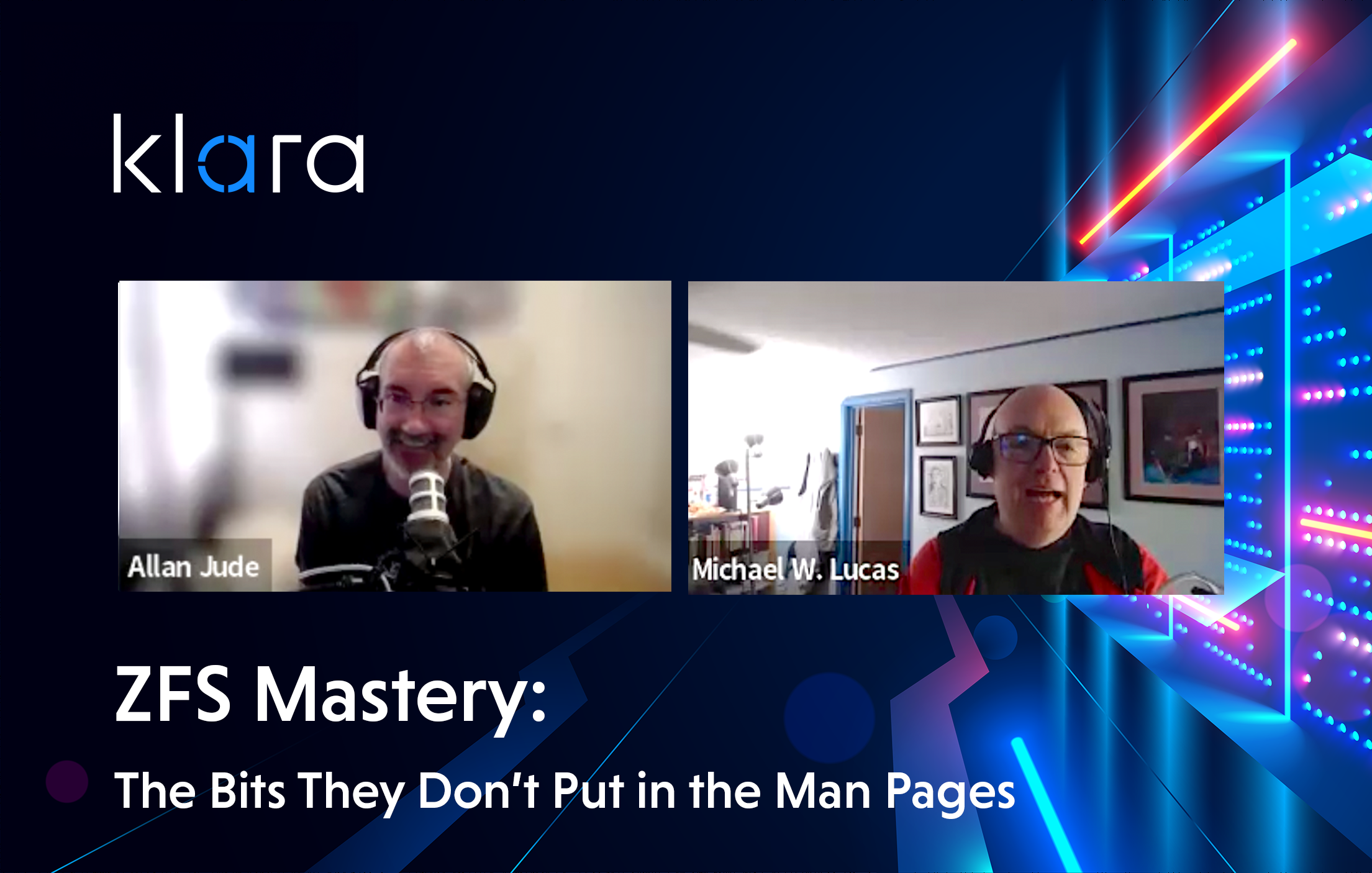
Some of the best knowledge about ZFS doesn't make it into the official documentation. That's where experience, deep dives, and the occasional war story come in.
Join Allan Jude and Michael W. Lucas (noted technical author of FreeBSD Mastery: ZFS) for a special session that brings together two of the most recognizable names in the ZFS world.
They'll share insights you won't find in the man pages — from practical tuning, to gotchas in production, to why certain design decisions were made the way they were.
What You’ll Learn:
- Hard-won lessons from running ZFS in production at scale
- Tuning advice and operational practices that never make the docs
- How ZFS thinking has evolved across versions
- Insider stories and perspectives from decades of experience
Top Questions from the Session—Answered!
🗨️ What's the most common ZFS misconfiguration or tuning mistake that quietly harms performance or reliability but rarely gets mentioned in the docs?
A major quiet pitfall is mismatched block sizes—for example, 64K writes to a dataset with a 128K recordsize or 16K ZVOLs on 32K-sector NVMe drives, which can cause unnecessary work, amplification, and sometimes wasted space. Other recurring issues include tiny files on wide RAIDZ layouts and pools running near full, both of which can lead to unexpected performance and capacity problems.
🗨️ How should ZFS snapshots and replication be monitored, and how does this tie into Prometheus/Grafana dashboards?
Make sure snapshot names include a timestamp. On the receiving side, track the newest snapshot and compare its timestamp to the current time to see how far behind replication is, then graph that lag in Prometheus and alert if it exceeds your RPO/RTO tolerance. Also include the hostname (or a short host ID) in the snapshot name so snapshots from different machines can be distinguished.
🗨️ Your best practices list advises avoiding the use of the root dataset. What issues can arise if it’s used to store data?
The dataset that shares the pool's name comes with several limitations: it can't be renamed or easily encrypted, all properties inherit from it, and restoring it through replication often requires force-overwriting the entire pool. The recommended approach is to leave it empty, set canmount=off, and create separate datasets for actual data.
Date: November 19, 2025
Time: 11:00 AM EDT
Duration: 50 minutes.